0 m
Jurassic Mission
General project summary
Jurassic Mission is a family-friendly virtual reality experience developed for the Paléospace in Villers-sur-Mer. It is designed for a wide audience aged 7 and over and is accessible to people with reduced mobility.
Mission Jurassique takes a more accessible, dynamic and playful approach. Its visual world is based on a solid artistic vision, informed by the advice of an experienced palaeontologist.
The experience takes visitors on a journey to the Jurassic period, into a world inspired by the environments and species associated with the Normandy region and the Paléospace’s collections and scientific themes.
The narrative concept
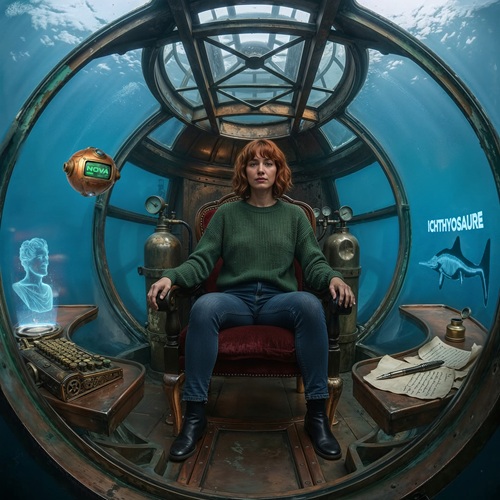
Visitors do not simply witness a succession of dinosaurs as in a living catalogue. They are taken on a mission, guided by two protagonists: Sam the palaeontologist and Nova the on-board computer.
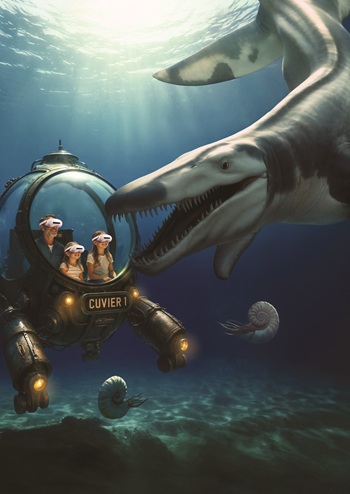
Visitors are aboard a time capsule, the Cuvier. Sam guides the audience from a distance via his voice-over, whilst Nova reassures the youngest visitors with her presence.
Together, they provide the necessary information, set the pace for the discoveries and help maintain a lively, family-friendly tone that is immediately accessible to everyone.
The presentation of scientific content had to be achieved through direct observation, surprise, changes of scale, closeness to the animals, staging, movement and a sense of adventure.
The narration therefore had to remain simple, concise and engaging, whilst maintaining genuine scientific rigour in the information conveyed, the behaviour of the species and the depiction of Jurassic environments.
An experience designed as a journey of discovery
The educational aims of Mission Jurassique are to provide the public with some simple yet essential scientific insights. In particular, the experience helps visitors understand the difference between dinosaurs - which were primarily land-dwelling animals - and the marine reptiles that inhabited the oceans.
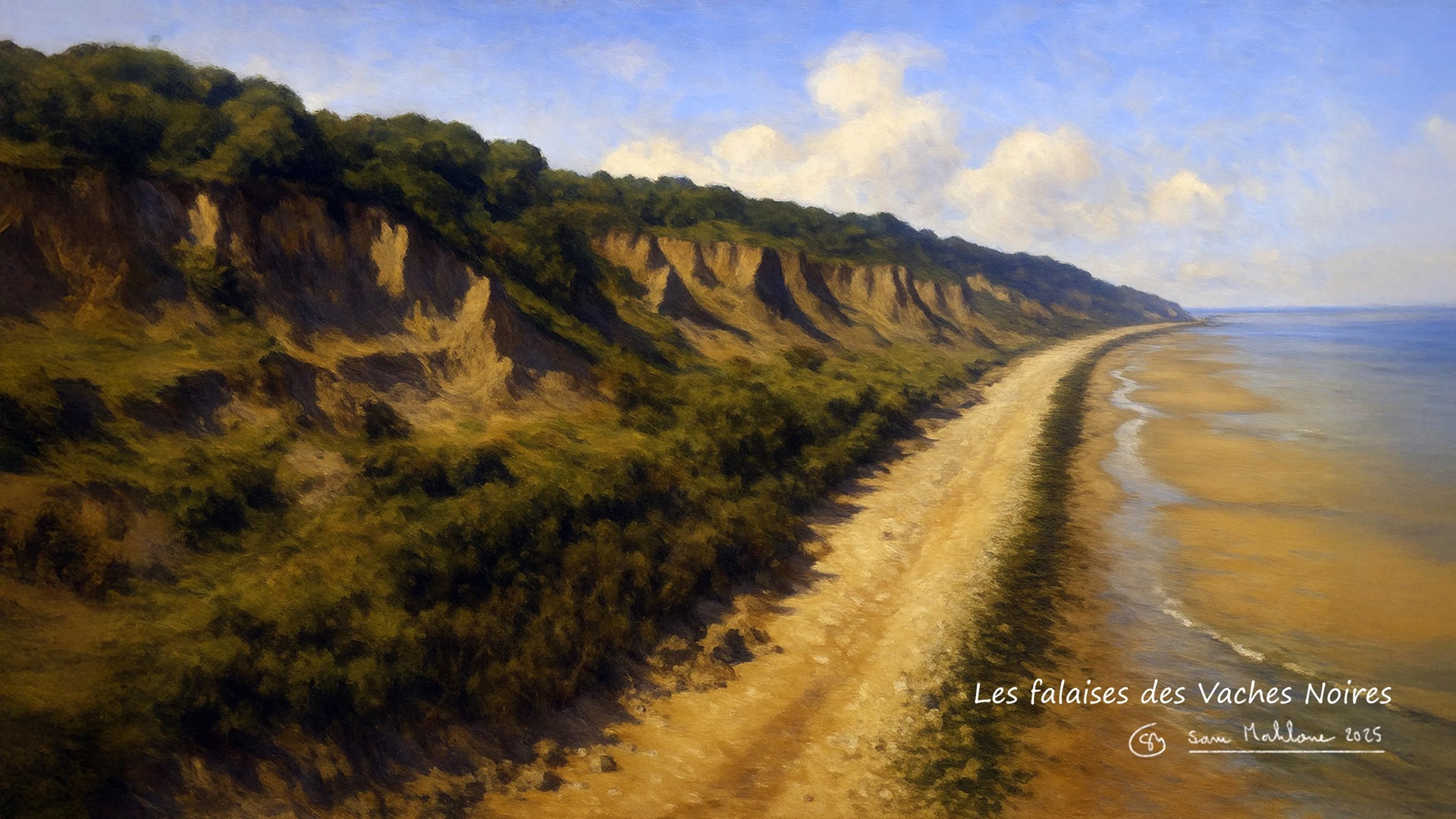
It also serves as a reminder that, during the Jurassic period, much of Normandy lay beneath the sea, in a marine environment very different from the one we know today. Finally, it sheds light on the formation of the Vaches Noires cliffs: their geological layers were formed from sediments accumulated on an ancient seabed, thus preserving the traces and fossils of a vanished world.
Species studied
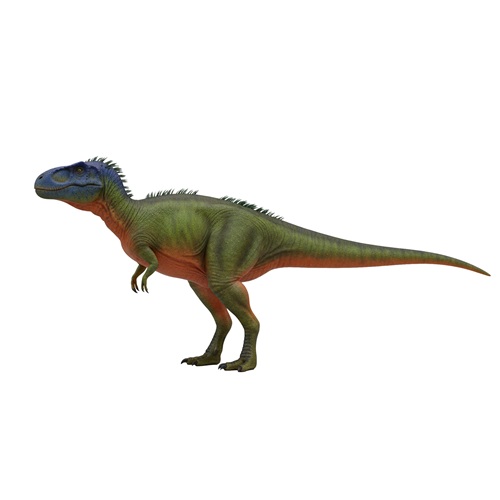
Streptospondylus
The great terrestrial predator. It immediately lends a strong and recognisable ‘dinosaur’ element, without resorting to clichéd species that do not belong to the local Jurassic context.
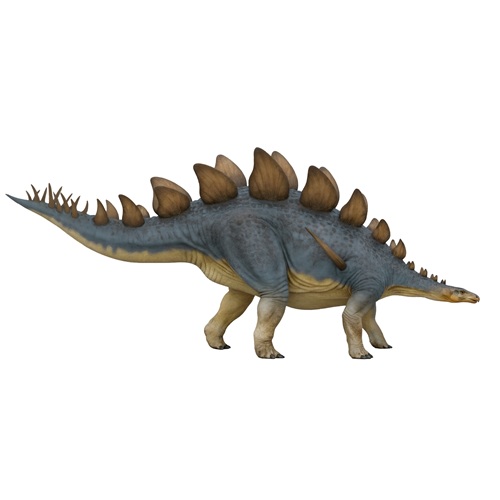
Lexovisaurus
A herbivorous dinosaur with distinctive dorsal plates or structures, notable for its silhouette, distinctiveness and contrast with the predators.
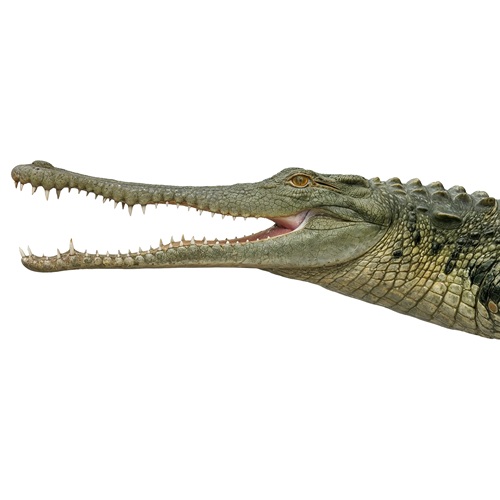
Steneosaurus
A marine or semi-aquatic crocodylomorph with a long snout, illustrating that the Jurassic seas were home to forms very different from terrestrial dinosaurs.
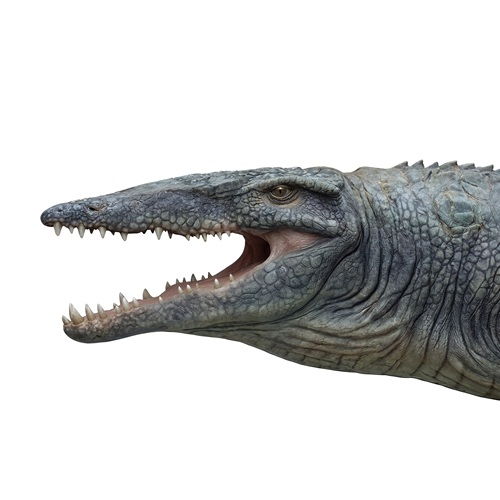 SteneosaurusA marine or semi-aquatic crocodylomorph with a long snout, illustrating that the Jurassic seas were home to forms very different from terrestrial dinosaurs.
Metriorhynchus
A marine predator remarkably well-adapted to swimming, with a silhouette particularly well-suited to an underwater VR scene.
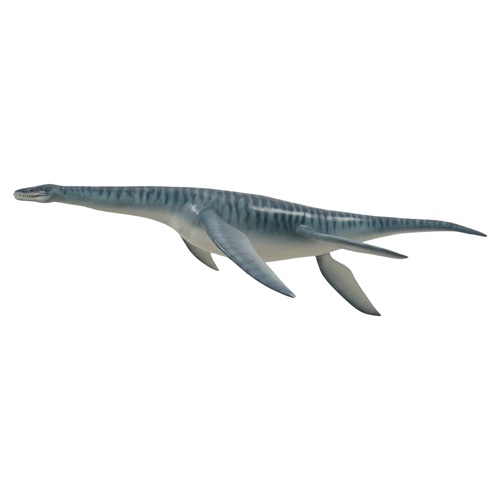 MetriorhynchusA
marine predator remarkably well-suited to swimming, with a silhouette that is particularly well-suited to an underwater VR scene.
MetriorhynchusA
marine predator remarkably well-suited to swimming, with a silhouette that is particularly well-suited to an underwater VR scene.
Plesiosaur
A creature that is instantly spectacular thanks to its long neck and distinctive swimming style. It offers a more graceful and marvellous spectacle.
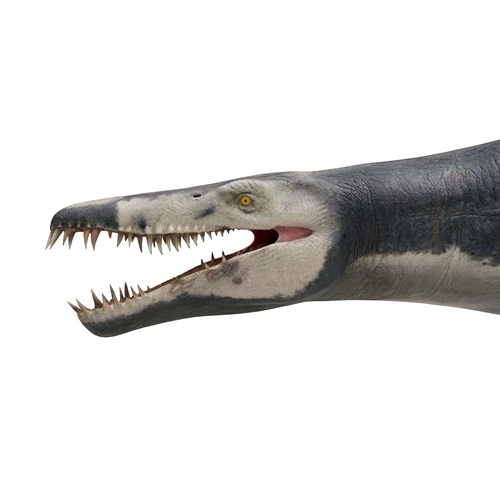 PlesiosaurA creature that is instantly spectacular thanks to its long neck and distinctive swimming style. It offers a more graceful and wondrous spectacle. Liopleurodon ferox
 Liopleurodon ferox
One of the most spectacular highlights of the exhibition. A massive marine predator, designed to evoke a sense of power and vulnerability linked to its sheer scale.
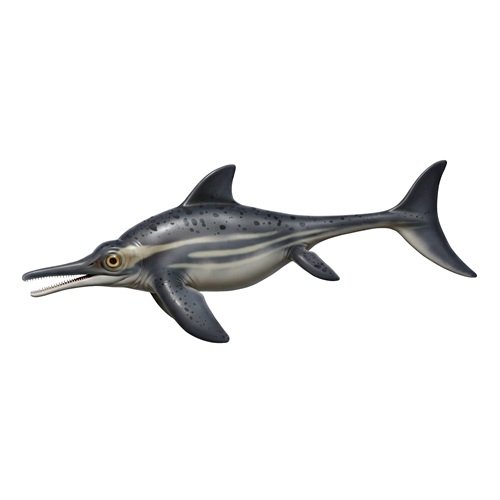
Ichthyosaur
A streamlined, fast-moving marine animal, highly effective at creating movement, group passages and a sense of life within the environment.
Above all, this choice served to highlight an important point: the Jurassic is not just a world of land-dwelling dinosaurs. It is also a realm of extremely diverse marine animals, which fits particularly well with the identity of the Paléospace and the area around Villers-sur-Mer.
Artistic direction
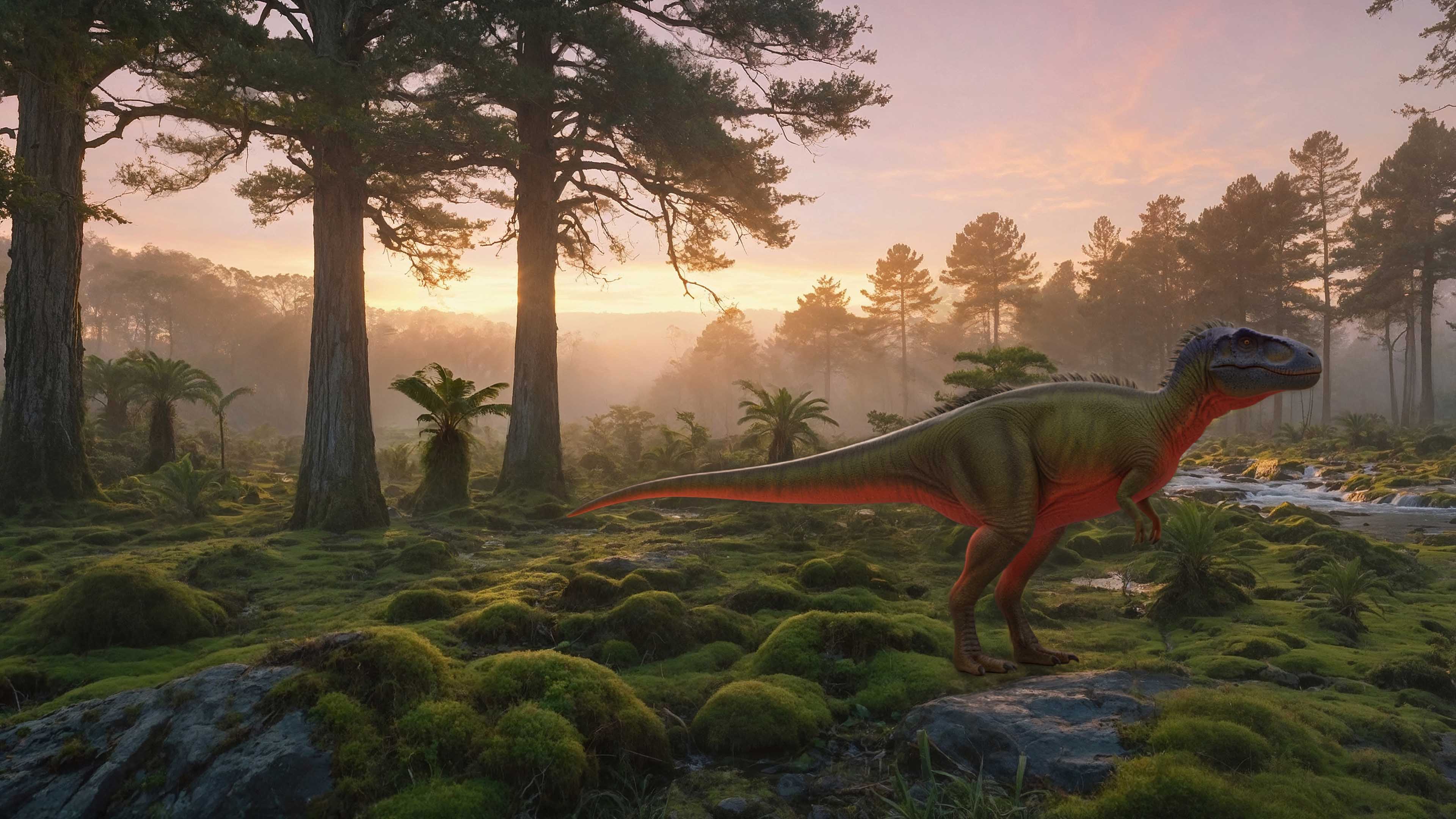
The artistic direction for Mission Jurassique had to come as close as possible to a photorealistic scientific reconstruction.
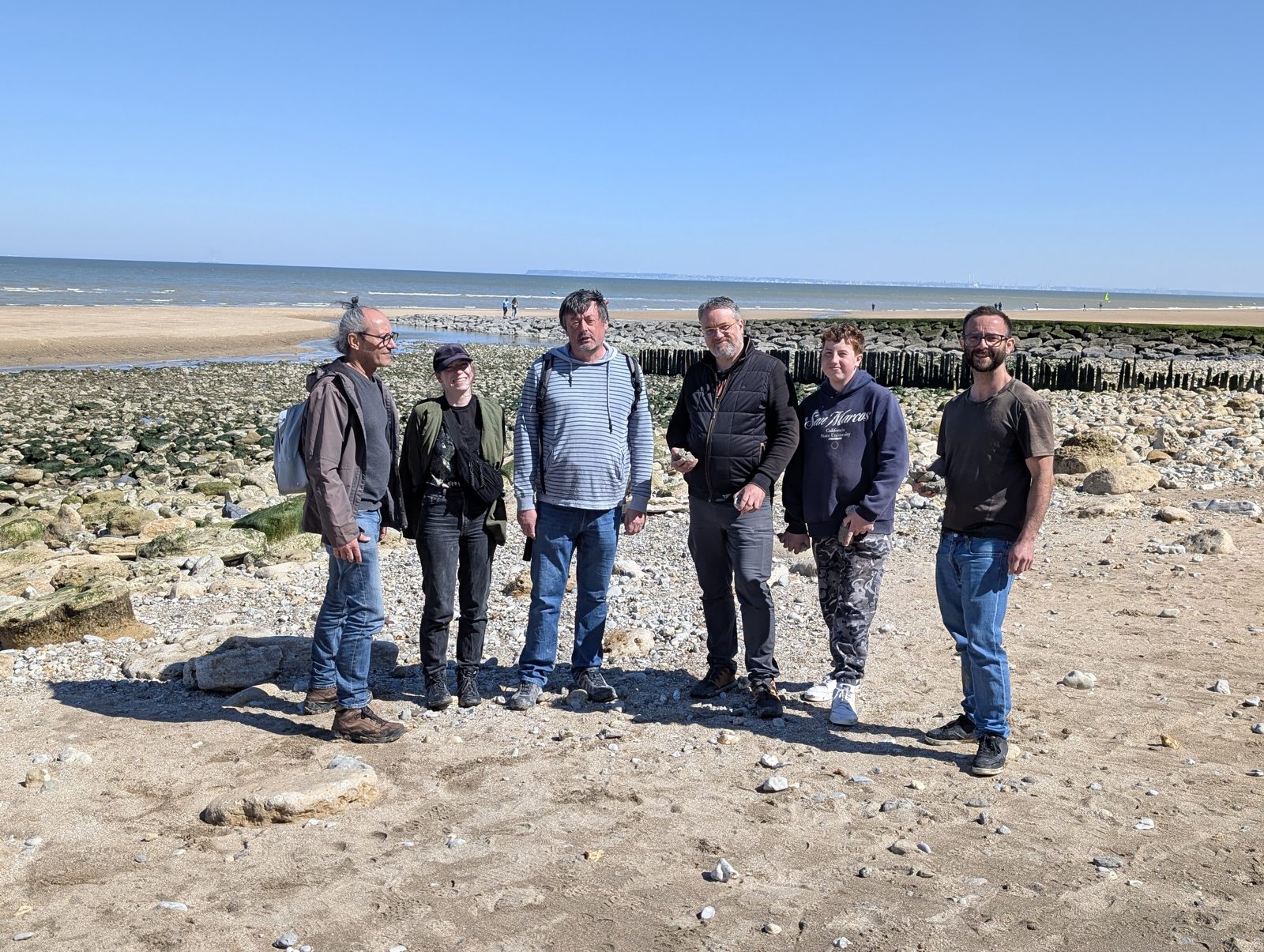
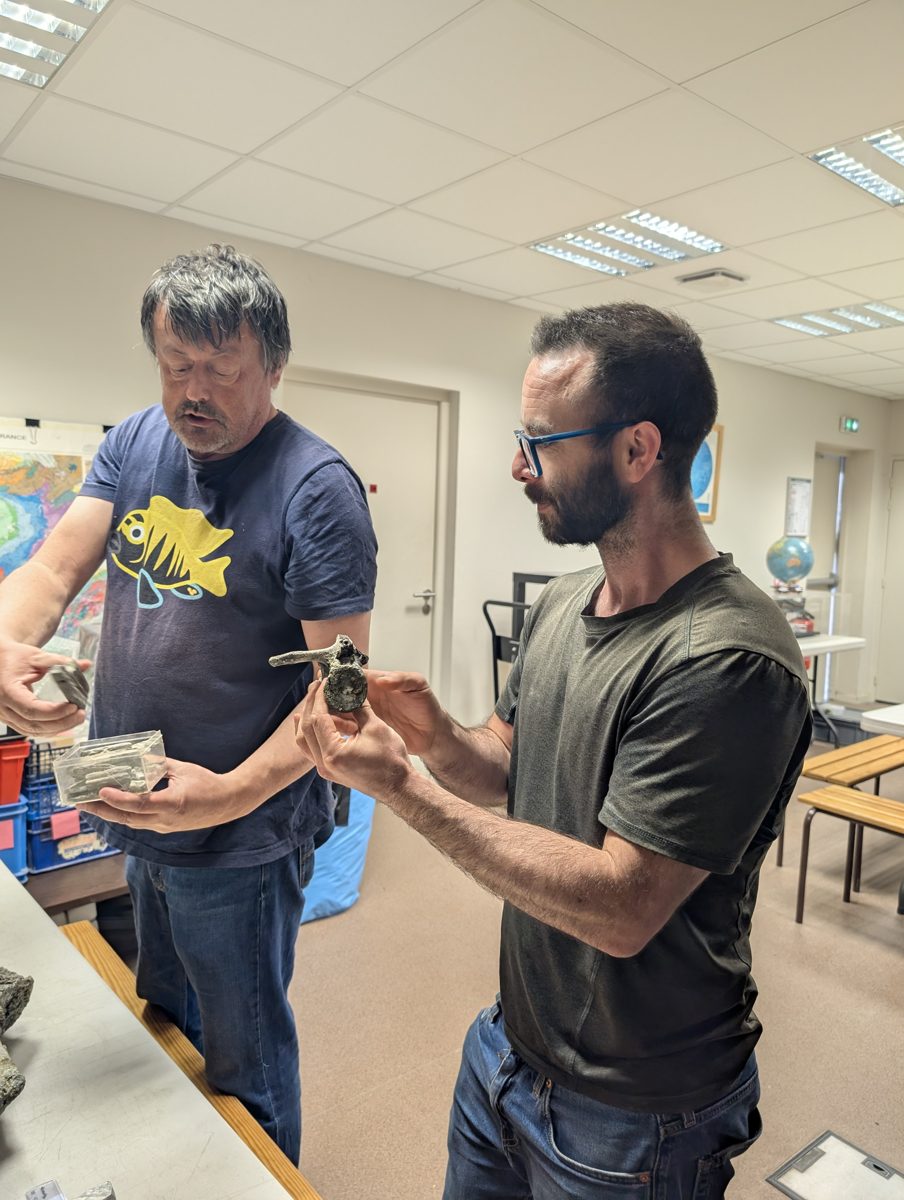
To achieve this, we held extensive discussions with the Paléospace team to familiarise ourselves with the requirements of this discipline. We had to learn to identify the species, incorporate their key anatomical features, gain a better understanding of their likely behaviour and, thanks to the invaluable advice of palaeontologists, select the most plausible postures and animations based on current knowledge.
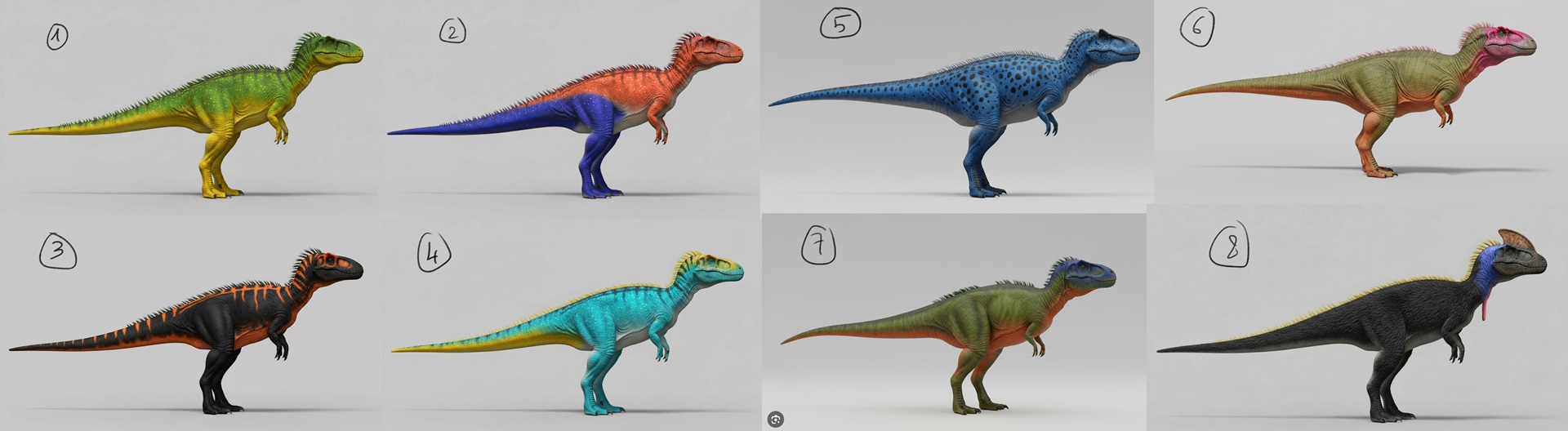
Our only real freedom lay in what the fossils will probably never be able to reveal to us with certainty: the colours, patterns and adornments of these animals.
We therefore designed several concept boards, explored various visual hypotheses, and then collectively refined the proposals until we found the most convincing solutions. This approach gives the experience a unique character: the animals’ colourings were not chosen arbitrarily, but developed and validated with the Paléospace team, following a genuine collaborative effort between artistic creation and scientific rigour.
The fundamental role of scale
Much of our thinking centred on what VR does better than a screen: conveying a sense of scale.
The experience therefore had to feature an animal passing close to the viewer, a silhouette appearing behind a part of the set, a predator gradually revealed, a marine creature crossing the field above or below the audience, a massive animal whose entire body is not immediately visible, and shifts between small groups of animals and large predators.
The idea was not simply to string together a series of spectacular appearances, but to weave each encounter with the animals into a genuine narrative thread, so that their presence plays a full part in the progression of the experience.
The overall tone
The project had to remain family-friendly, adventurous and spectacular, whilst maintaining genuine scientific rigour and being highly accessible to younger visitors.
This balance relies in particular on a narrative structure featuring two complementary voices. Sam, the palaeontologist heard on the radio, embodies the mentor figure: he guides the mission, imparts knowledge and provides the scientific context necessary for understanding the Jurassic world. Alongside the viewer, Nova, the on-board computer, plays the role of the innocent observer. Curious, spontaneous and sometimes naïve, she asks the simplest questions - the very ones that young viewers might ask themselves but don’t always dare to voice.
This dialogue allows scientific concepts to be introduced naturally, complex points to be clarified and a lively tone to be maintained, without ever giving the viewer the impression that they are sitting in a lecture.
Conclusion
The core of the work on *Mission Jurassique* lies in this idea: to help people discover the Jurassic not simply as a lesson about a vanished world, but as a universe into which everyone can truly feel they have stepped.
Virtual reality enables us to transform palaeontological knowledge into a lived experience. The audience should not merely remember that a Liopleurodon once existed: they should recall the moment they saw it moving through its environment. They must not merely learn that marine reptiles once inhabited Normandy: during the experience, they must have felt as though they were sharing their world.
Finally, we would like to extend our warmest thanks to the entire Paléospace team for their trust, their willingness to help, their passion and the generosity with which they shared their knowledge. This project was built on a constant dialogue between creativity, storytelling and scientific rigour, and this collaboration is one of its greatest assets.