Aladin
The Tale That Saved Scheherazade
A woman enters the room of a man who kills.
She has no weapon.
She has stories.
That’s enough.
A fresh take on the Thousand and One Nights
Aladin is a 25-minute immersive virtual reality experience. It tells the story of how a woman nursed a wounded king by telling him a story, night after night: not to entertain him, but to heal him.
A thousand nights have passed. Only one remains. It is this final night that you experience: the one in which Scheherazade, looking back on the tales she has chosen, reveals what she sought to heal - and why.
This is not an adaptation of *One Thousand and One Nights*. It is a journey into Scheherazade’s own therapeutic process. The audience does not merely watch the tales: they experience them from within, guided by her voice.
Eight chapters, a single night. A journey from extreme danger to mutual understanding.
A serious theme,
suitable for all ages
The subject matter is profound: a broken king, a woman who heals him through storytelling. But nothing is ever shown head-on. The narrative relies above all on symbolism, imagery and sound, as in all tales - and this is precisely what makes it accessible to all ages.
As Bruno Bettelheim wrote, a fairy tale never speaks directly of the wound: it shifts it, cloaks it, makes it bearable. Everyone takes from it what they are ready to understand. The experience is designed for a family audience, aged 8 and over.
The cave, the lamp, the sea voyage. The colours, the magic, the adventure. A gateway to a universal literary heritage.
A woman’s courage, fear, doubt, reconciliation. The story becomes a mirror of their own questions.
The therapeutic mechanism, the healing process, the symbolic significance. A reading that brings out the full depth of the tale.
No explicit scenes of violence, no images of blood. Violence is suggested through symbolism, never shown.
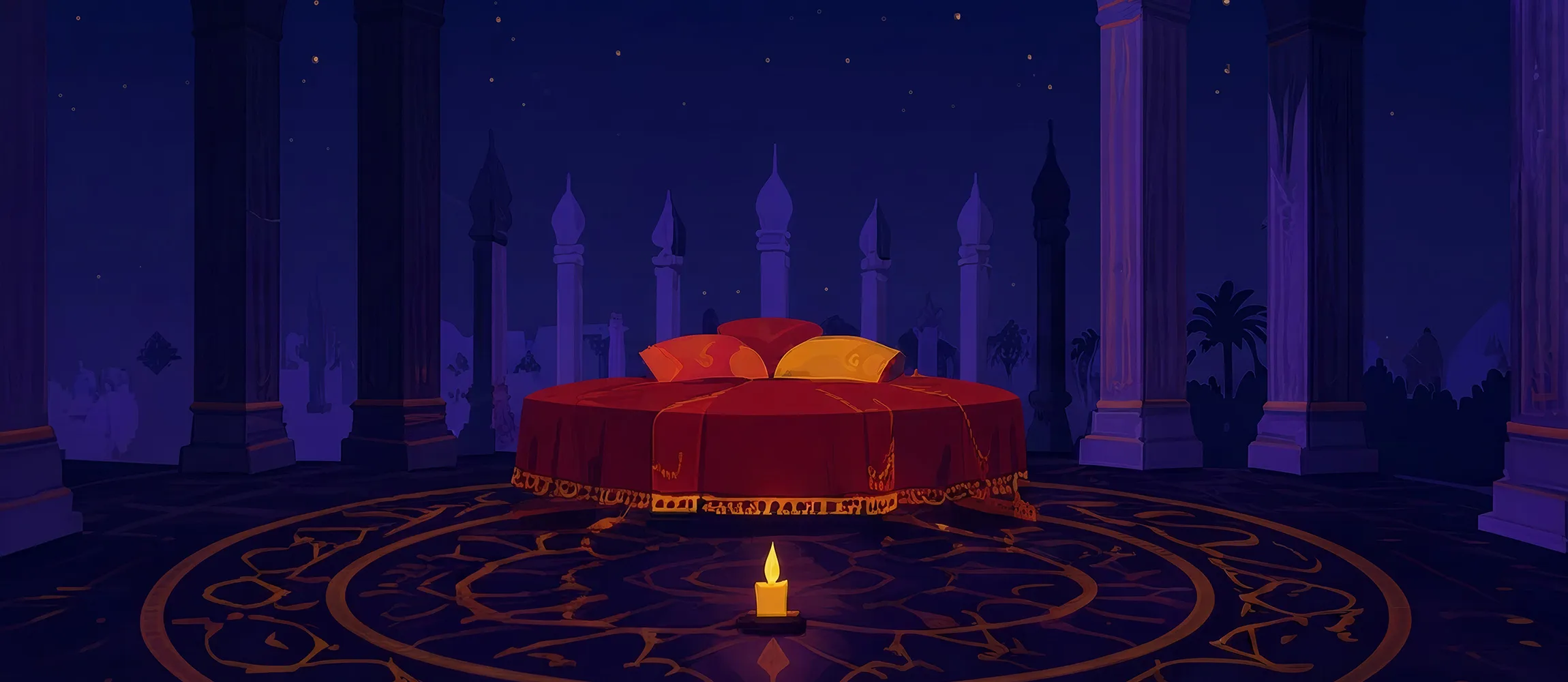
Stories heal where words fall short
At A.G.I.R, we believe that we remember best what we feel. This project is the purest demonstration of that: the Thousand and One Nights is one of humanity’s oldest therapeutic texts. Before Freud, before Jung, before Bettelheim, there was Scheherazade.
A woman who knew that stories reach places where direct words cannot. Bruno Bettelheim demonstrated this in *The Uses of Enchantment*: fairy tales never speak directly of wounds. They shift them, cloak them, make them bearable. We understand without needing an explanation. Healing takes place within the symbolic space of the narrative.
It is precisely this mechanism that this experience makes visible and tangible. Understanding, yes - but above all, feeling.
What this project is not
The *One Thousand and One Nights* have been plundered, watered down and orientalised for centuries. The depth of the original texts has been lost beneath the clichés.
This project does not tell the stories of Ali Baba, Aladin or Sinbad. It uses these tales as Scheherazade used them: as tools for healing, as mirrors held up to a specific wound.
Aladin on its own would be a trap: the audience thinks it knows this story, but what it knows is a cartoon. Galland’s tale dates from 1704. Scheherazade is the way out of this trap. She reframes the experience for what it truly is: a return to the source, told by the one who, first and foremost, saved her own life by inventing stories.
Aladin explains what it is.
Scheherazade explains why it matters.
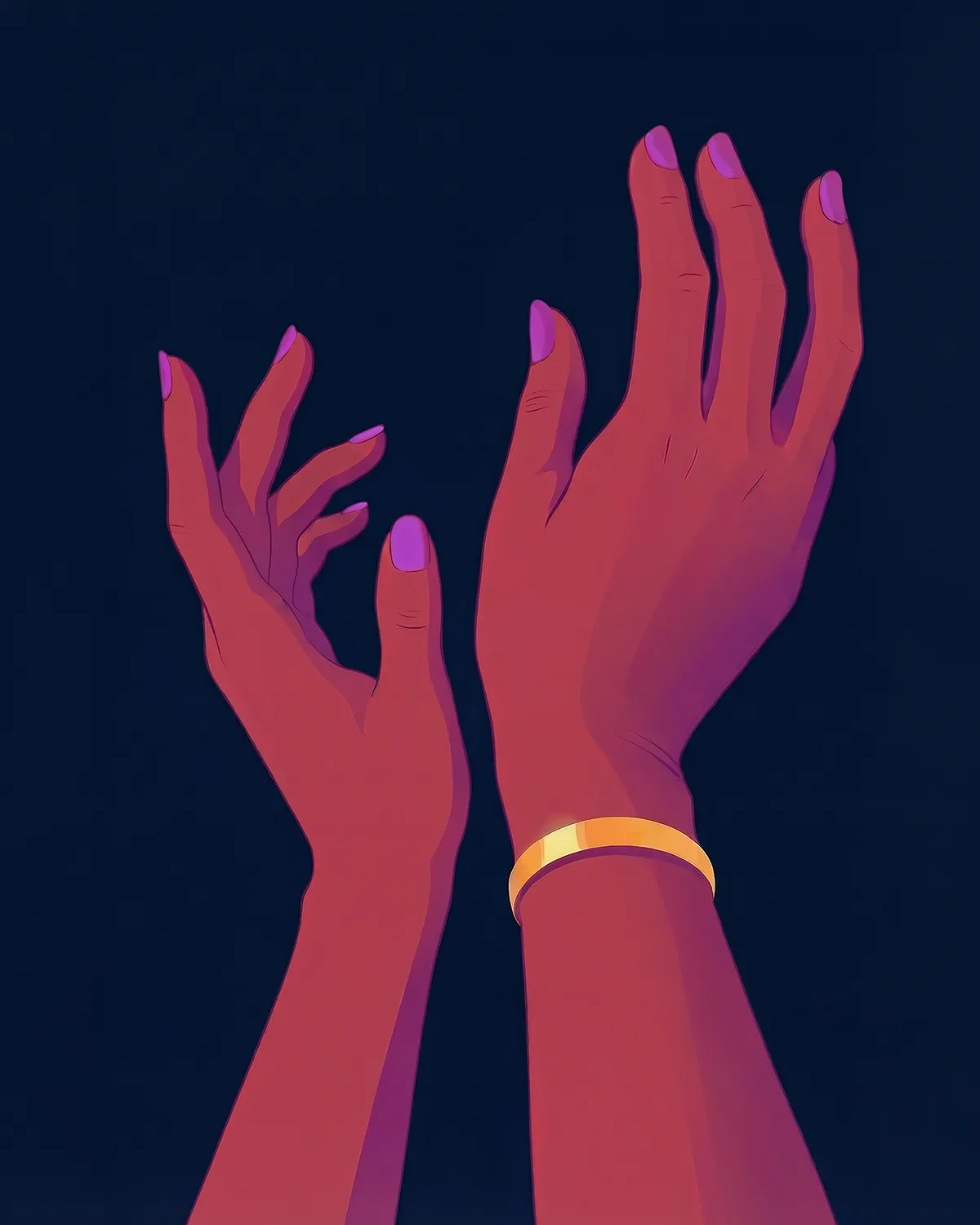
Scheherazade, storyteller and therapist
In this project, Scheherazade is not just a storyteller. She is also a therapist. She saw what no one else wanted to see: a king wounded at his very core.
Each tale she chooses addresses a specific symptom: secrecy, extinguished desire, immobility, fear of tenderness, forgotten love. She names her characters just as a doctor names his remedies.
But the therapist is also a vulnerable woman. That pivotal moment, when she connects with her patient on a shared human level, is the dramatic heart of the entire experience.
Every shape carries meaning;
every colour is an intention
The aesthetic draws inspiration from the work of Michel Ocelot, and in particular from *Azur and Asmar*: blocks of bold colours, crisp outlines, geometric costumes, and sets that suggest rather than depict in detail. This is not a choice made by default, but one made out of conviction.
Persian miniaturism and Arabic calligraphy, from which Ocelot himself draws inspiration, do not seek realism. They seek the essential.
The cel-shading rendering style is also best suited to standalone headsets: it eliminates computationally intensive elements. Low-poly characters, a limited and consistent colour palette, and distant backgrounds rendered as 2D sprites. A technical constraint transformed into a visual signature - exactly what Nintendo did with *Zelda: Wind Waker*.
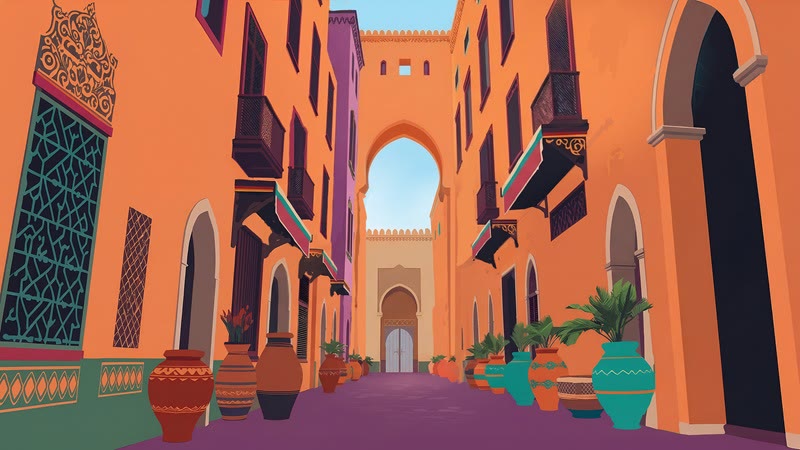
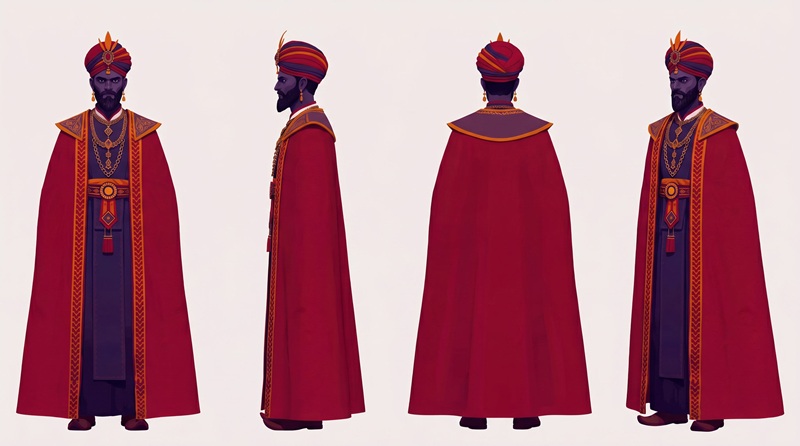
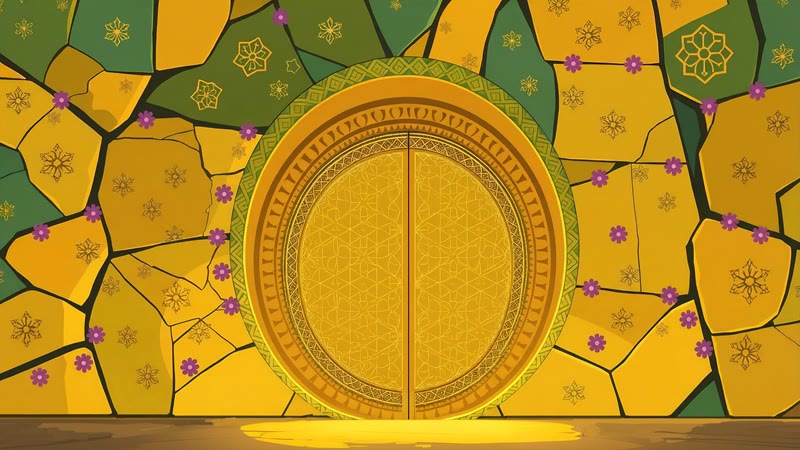
Warm and golden: gold, sand, terracotta, henna.
Cool and blue: indigo, night, ink.
Natural and white: the first light of day.
What the image leaves unsaid, the sound tells
Scheherazade’s voice-over is the guiding thread. It does not describe what the viewer sees: it reveals what the images do not show.
An entirely original score, composed specifically for this experience. It functions as a dramatic element in its own right: not merely background music, but a character in its own right.
The narrative unfolds primarily through gesture and gaze, without ever explaining everything. The sound design and music convey the bulk of the emotion, whilst Scheherazade’s voice illuminates each scene.
Are you interested in this experience?
Let’s discuss setting it up at your venue, the schedule and the access options.